When I was younger, visiting a friend meant I’d see their household’s collection of console games. We always played Halo, so it amazed me how many games existed that I’d never heard of or seen; most would have never flown in my household as a juvenile gamer. Call of Duty? Too much blood! Sexual Themes in Mass Effect? Gross! The games owned by older siblings were always the most interesting to my friends and I, because telling any kid they’re “not old enough to play that” only makes them want to play it more.
There were a lot of games that piqued my interest, including this one:
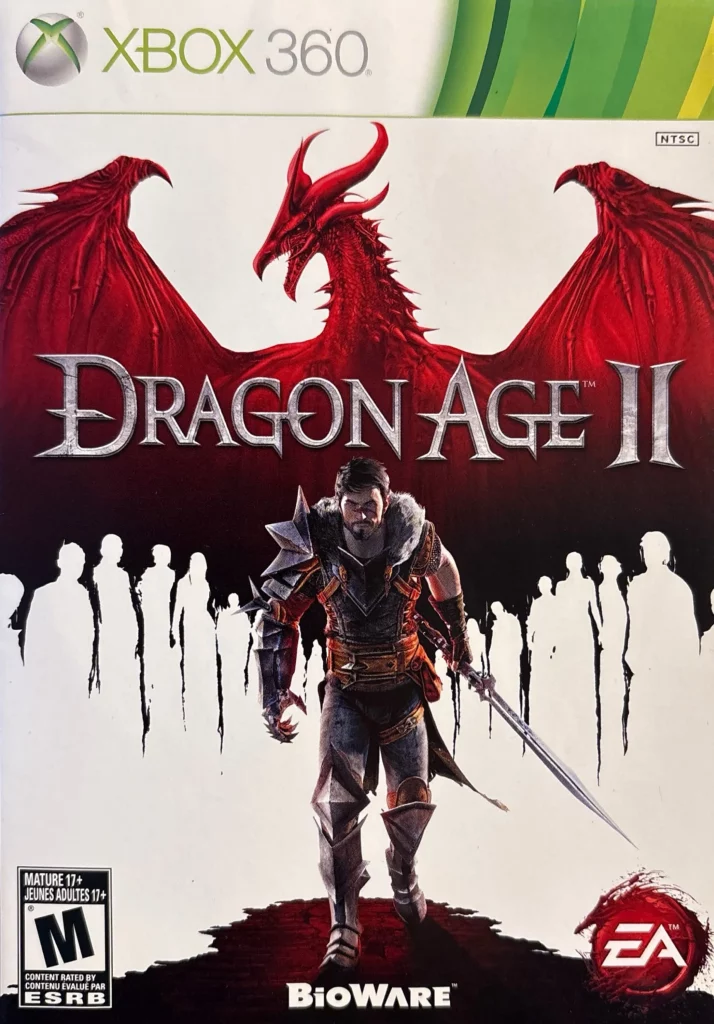
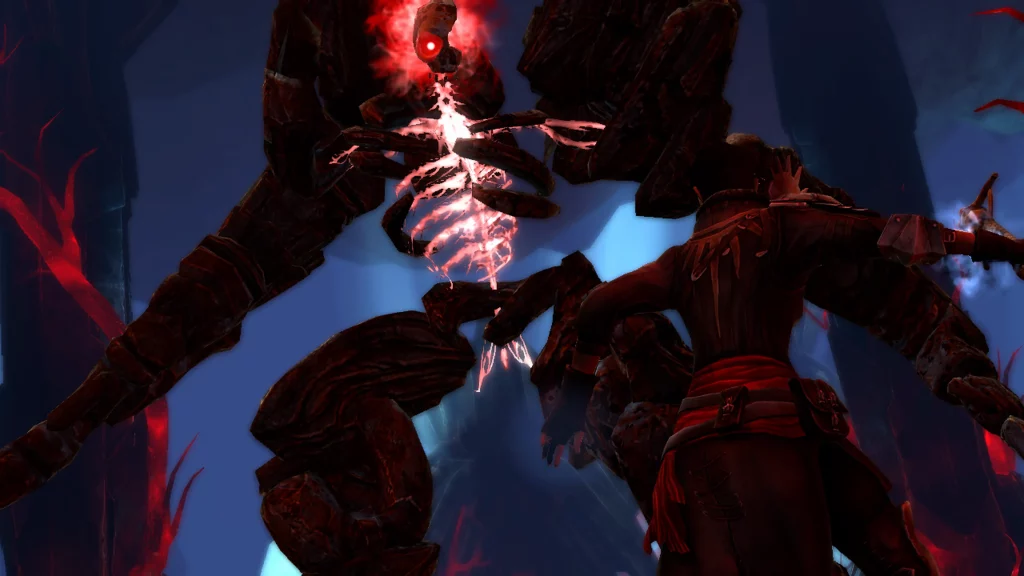
I watched Dragon Age II’s cinematic “Destiny” trailer many times in complete awe; it didn’t matter that I hadn’t played the first game. Many years went by, and although I would eventually play Dragon Age II, it was only after I had beaten Origins, Inquisition, and even the most-recent Veilguard.
I can’t say for sure why Dragon Age II eluded my attention for so many years, given my early obsession with it. Perhaps it was in part due to its mixed reception. BioWare was constrained to a 16 month development cycle and it shows in its many reused visual assets (yes, this is the same cave you just explored, but now it’s reversed!). The real-time with pause combat system of Origins – remarked for its granular control over characters – had also been traded for fast-paced action RPG mechanics. Dragon Age II is still a party based fantasy game, but everything about it is shorter, smaller, and simpler than its predecessor.
Something the game does have in common with Origins is technical problems. I’m a PC player for the tactical combat of Origins, but a console player for Dragon Age II. I had to tinker to make Origins stable, but I didn’t anticipate my experience playing on Xbox to be even more troublesome. Corrupted saves, conversations becoming stuck in a “loading…” state, and hair-pulling frustration over the game denying me from playing if it was unable to validate that I owned the DLC – a side effect I suspect is due to a hiccup when connecting to BioWare’s Dragon Age servers. But if I were susceptible to bugs and crashes halting my enjoyment, role-playing games wouldn’t be my favourite genre. And I certainly wouldn’t be a fan of Origins.
For all of the shortcomings and flaws Dragon Age II is so tightly associated with, I place more importance on its wildly interesting companions and shift in storytelling.
Most RPG stories provide a central objective that players work to achieve. Usually, it involves saving the world in one way or another. High stakes tend to incentivize us to resolve them. But Dragon Age II has the surprising awareness that it is a smaller game, and in turn, provides an appropriately scoped goal. In Act 1, you’re focused on getting your family away from the Darkspawn invasion and struggling to survive in a new city. Having earned notoriety, Act 2 sees you working with the city’s leadership to blot out a Qunari coup while political tension between the templars and mages swells. In Act 3, the templar-mage conflict erupts into mass-killings, and you’re called to take a side.
There is no world-ending threat in Dragon Age II. Instead, the game wraps itself up in the torment of a single place: the city of Kirkwall. Even with its narrowed scope, the player still has a great amount of choice to make, with consequences that manipulate the story. It relies on robust and complex dilemmas rather than grandiose backdrops.
Dragon Age II offers so much freedom to the player that I had entirely missed one of the companions (Fenris) during my first playthrough; a result of me skipping a side quest I thought was inconsequential. And it turns out that Fenris, along with every other potential party member, is exceptional. Companions have strong and varied personalities. The banter while adventuring is unmatched. Bringing Fenris and Anders together – two characters that completely oppose each other – reveals quite a lot about their beliefs, and it’s quite interesting to let their disagreements bubble to the surface. Companions often force the player to take sides when presented with choice during quests, typically letting one companion down while gaining the trust of the other.
Companions can outright leave your party if you choose not to support them in specific situations, a consequence that hits especially hard because of the attachment the player develops to them. No two of the companions are alike and each is grounded in the world. It can sometimes feel like party members don’t belong to the in-game universe, sticking out like sore thumbs, but Dragon Age II has given each of its companions a distinct style that still feels natural in the setting.
Dragon Age II is probably not the “best” Dragon Age game, but I don’t think such a comparison should dim the spotlight of the captivating narrative and characters offered in this sequel. Given the shorter runtime, Dragon Age II is far easier to replay and experience that golden age BioWare vibe without having to commit the 40+ hours that is demanded of the others.
Anyway, time to replay Origins?